
A practical moving house guide to help you plan, pack, organise your belongings and use self storage to make moving day easier.
Moving House Guide
Make Moving House Simpler
Moving house can involve weeks of organising, packing, paperwork and decision-making before the removal van even arrives.
Whether you are moving directly from one property to another, downsizing, waiting for a property purchase to complete or temporarily moving into rented accommodation, planning ahead can make the whole process much easier.
One of the biggest challenges is dealing with the amount of furniture, boxes and personal belongings involved. Trying to move everything at once can make both your old and new property difficult to organise.
Self storage can give you somewhere secure to keep belongings temporarily while you prepare your move, complete renovation work or gradually settle into your new home.
This guide covers the key stages of moving house and how to organise your belongings before, during and after moving day.
Start Planning Your Move Early
A successful house move usually starts long before moving day.
As soon as you know you are likely to move, begin creating a simple timeline. You do not need to organise everything immediately, but breaking the process into smaller stages can prevent several jobs becoming urgent at the same time.
Start with the tasks that can be completed well in advance.
These may include:
- Decluttering Rooms
- Collecting Packing Materials
- Booking a Removal Company
- Arranging Self Storage
- Sorting Important Documents
- Changing Addresses
- Planning Utility Transfers
- Taking Measurements at Your New Property
The more you can complete before the final week, the easier moving day is likely to be.
Declutter Before You Start Packing
Moving house is an ideal opportunity to decide which belongings you genuinely want to take with you.
There is little benefit in carefully packing, transporting and unpacking items that you no longer use or need.
Work through your home one room at a time and separate belongings into categories.
A simple system is:
- Take to the New House
- Put Into Storage
- Sell
- Donate
- Recycle
- Dispose Of
Be realistic about what you need.
Furniture that will not fit your new property, clothes that have not been worn for years and unused household items can all add unnecessary work and moving costs.
Decluttering early also gives you a much clearer idea of how many boxes you will need.
Create a Moving House Checklist
A checklist helps prevent smaller but important tasks from being forgotten.
Keep your moving checklist somewhere easy to access, such as your phone, laptop or a notebook that stays with you throughout the move.
Include both packing tasks and administrative jobs.
Your checklist could include:
- Book Your Removal Company
- Arrange Storage if Required
- Confirm Your Moving Date
- Notify Utility Providers
- Redirect Your Post
- Update Insurance Details
- Change Your Address with Banks and Other Organisations
- Pack Non-Essential Belongings
- Prepare an Essentials Box
- Take Final Meter Readings
- Check Every Room Before Leaving
Ticking off tasks as you complete them also makes the move feel considerably more manageable.
Use Self Storage to Reduce Moving Day Pressure
You do not necessarily need to move every possession from one property to another on the same day.
Self storage can give you more flexibility.
You could move boxes, seasonal belongings, spare furniture and other non-essential items into storage several weeks before moving.
This can reduce the amount of work required on moving day and make your existing property easier to clean and prepare.
Storage can be especially useful if:
- Your Completion Dates Do Not Match
- You Are Moving Into Temporary Accommodation
- You Are Downsizing
- Your New Property Needs Renovation
- You Need Time to Decide Where Furniture Will Go
- You Are Moving in Several Stages
Perth Self Store provides indoor storage units alongside drive-up storage options, giving you flexibility depending on the amount and type of belongings you need to store.
Choose the Right Storage Unit
If you are using storage during your move, think carefully about how much space you need.
A smaller unit may be enough if you are only storing boxes and personal belongings.
If you are storing furniture, appliances and the contents of several rooms, you may need considerably more space.
Start by making a rough inventory.
Include:
- Boxes
- Beds and Mattresses
- Sofas
- Tables and Chairs
- Wardrobes
- Appliances
- Garden Furniture
- Garage Contents
You should also think about whether you need regular access.
If you expect to retrieve belongings during the moving process, leave enough room inside your unit to reach them.
Gather Packing Materials Before You Begin
Running out of boxes or tape halfway through packing can slow everything down.
Gather your materials before you start.
Useful packing supplies include:
- Strong Cardboard Boxes
- Plastic Storage Boxes
- Packing Tape
- Marker Pens
- Bubble Wrap
- Packing Paper
- Furniture Covers
- Mattress Covers
- Labels
- Scissors
Use strong boxes wherever possible.
Boxes that have become damp, damaged or weakened can collapse when stacked or carried.
Try to use boxes of similar sizes because they are easier to organise inside both a removal vehicle and a storage unit.
Pack One Room at a Time
Packing randomly can make unpacking extremely difficult.
Instead, work through your property room by room.
Finish one area before moving onto the next where possible.
This keeps related belongings together and makes your labels more useful.
For example:
- Kitchen
- Main Bedroom
- Living Room
- Bathroom
- Children’s Bedroom
- Office
- Garage
- Loft
When you arrive at your new property, boxes can then be taken directly to the correct room instead of being piled together in one central area.
Label Your Boxes Properly
Clear labelling can save a huge amount of time.
Write the destination room and a brief description of the contents on each box.
Do not rely on labels such as “stuff” or “miscellaneous”.
A better label might be:
Kitchen – Plates, Bowls and Mugs
or:
Main Bedroom – Winter Clothes
Mark boxes containing fragile items clearly.
It is also useful to label more than one side of each box so you can still identify it when boxes are stacked.
Create an Inventory
An inventory becomes especially useful if some of your belongings are going into storage.
Number each box and record what is inside it.
For example:
- Box 1 – Kitchen Crockery
- Box 2 – Kitchen Baking Equipment
- Box 3 – Bedroom Bedding
- Box 4 – Office Documents
- Box 5 – Living Room Books
You can keep this list on your phone or in a spreadsheet.
If you later need something from storage, you can identify the correct box without opening everything.
Pack Heavy Items into Smaller Boxes
Large boxes can become extremely difficult to lift when they are filled with heavy belongings.
Books are a common example.
A large box filled completely with books may become too heavy to move safely.
Instead, use smaller boxes for:
- Books
- Tools
- Documents
- Crockery
- Metal Items
Use larger boxes for lighter possessions such as bedding, cushions, clothing and soft furnishings.
This makes boxes easier to carry and reduces the chance of the bottom giving way.
Protect Fragile Belongings
Fragile items should never simply be placed inside a box and surrounded by other belongings.
Wrap them individually.
Use bubble wrap, packing paper or another suitable protective material.
Avoid leaving empty space inside fragile boxes because items can move around during transport.
Pay particular attention to:
- Glassware
- Crockery
- Mirrors
- Pictures
- Ornaments
- Lamps
- Electronics
Mark every fragile box clearly and tell your removal company which boxes require additional care.
Prepare Furniture Before Moving
Large furniture can be difficult to move through doorways, hallways and staircases.
Where practical, dismantle furniture before moving day.
This may include:
- Beds
- Dining Tables
- Desks
- Wardrobes
- Shelving Units
- Flat-Pack Furniture
Keep screws, bolts and other fittings together in clearly labelled bags.
Attach the bag securely to the corresponding item or keep all fittings together in a clearly marked moving box.
Photographing furniture before dismantling it can also make reassembly easier.
Measure Large Furniture Before Moving Day
Do not assume that everything from your current home will fit comfortably into your new property.
Measure larger furniture before moving.
You should also measure important areas at your new home, including:
- Doorways
- Hallways
- Staircases
- Room Dimensions
- Alcoves
- Lift Entrances
If a sofa, wardrobe or other large item will not fit, it is better to know before it arrives on the removal van.
Furniture that you are not ready to use can be placed into storage while you decide what to do with it.
Prepare Appliances Carefully
Large appliances need preparation before they are moved.
Fridges and freezers should be emptied and defrosted in advance.
Make sure they are completely dry before moving or placing them into storage.
Washing machines and dishwashers should also be drained according to the manufacturer’s instructions.
Secure loose cables and removable parts.
If you are unsure how to prepare a particular appliance, check the manufacturer’s guidance before moving it.
Pack an Essentials Box
One of the most useful things you can do is create a box containing everything you will need immediately after arriving.
Do not put this box deep inside the removal van.
Keep it easily accessible.
Useful items may include:
- Kettle
- Tea and Coffee
- Mugs
- Snacks
- Toilet Roll
- Basic Cleaning Supplies
- Phone Chargers
- Medication
- Basic Tools
- Important Documents
- Change of Clothes
- Children’s Essentials
- Pet Supplies
You may want to prepare one essentials box for the household and separate overnight bags for each person.
Keep Important Documents With You
Do not pack essential paperwork into a box that could disappear into the back of a removal vehicle or storage unit.
Keep important documents together in a folder that stays with you.
This might include:
- Identification
- Property Documents
- Insurance Documents
- Removal Company Details
- Utility Information
- Important Contact Numbers
- Medication Information
The same applies to valuables and irreplaceable personal items.
Keep them somewhere secure and under your control during the move.
Arrange Your Utilities and Address Changes
Moving involves more than physically transporting belongings.
You also need to update organisations with your new address and arrange utility changes.
Depending on your circumstances, you may need to contact:
- Electricity Provider
- Gas Provider
- Water Provider
- Broadband Provider
- Mobile Phone Provider
- Banks
- Insurance Companies
- Employer
- Schools
- Healthcare Providers
- Subscription Services
Make a list and work through it gradually rather than trying to remember everything after the move.
Prepare Your Old Property
As boxes disappear, use the opportunity to clean empty rooms.
This is usually easier than attempting to clean the entire property once everything has been removed.
Check cupboards, wardrobes, loft spaces, garages and sheds carefully.
Small belongings are easily forgotten.
Before finally leaving, walk through every room and check:
- Cupboards
- Drawers
- Lofts
- Sheds
- Garages
- Under Stairs
- Behind Doors
- Outdoor Areas
Take final meter readings where required and keep photographs for your records.
Plan Moving Day Access
Think about where your removal vehicle will park at both properties.
Restricted access can add unnecessary delays.
Consider:
- Driveway Access
- Parking Restrictions
- Narrow Roads
- Shared Entrances
- Apartment Access
- Lifts
- Stairs
- Gates
If your new property has difficult access, discuss this with your removal company before moving day.
Knowing about potential problems in advance gives everyone time to plan.
Load Belongings in the Right Order
The order items are loaded can make unloading much easier.
Belongings that you will need first should generally be loaded last.
That means they are more accessible when the vehicle reaches your new property.
Items you may want to access quickly include:
- Essentials Boxes
- Cleaning Supplies
- Basic Tools
- Bedding
- Children’s Items
- Pet Supplies
If some belongings are going into storage rather than your new home, separate them clearly before loading begins.
This helps prevent boxes being delivered to the wrong place.
Moving into Temporary Accommodation
Sometimes there is a gap between leaving one property and moving into another.
Trying to take the full contents of your home into temporary accommodation can be impractical.
Self storage provides somewhere to keep furniture and boxes until your permanent home is ready.
Take only what you expect to need during the temporary period.
Everything else can remain organised in storage.
If possible, create a separate section near the front of your storage unit containing belongings you may need during this period.
Moving into a Smaller Property
Downsizing can create a different challenge.
You may have more furniture and possessions than your new home can comfortably accommodate.
Do not feel pressured to make every decision before moving day.
Storage can give you time to decide what you genuinely want to keep.
You could temporarily store:
- Extra Furniture
- Books
- Seasonal Items
- Family Possessions
- Garden Equipment
- Tools
- Boxes You Have Not Yet Sorted
Once you have settled into your new property, you can gradually decide what to bring back and what you no longer need.
Moving into a Property That Needs Renovation
If your new home requires decorating or renovation, moving every piece of furniture in immediately can make the work much harder.
Temporary storage can keep rooms clear while work takes place.
This can be useful for:
- Painting
- Flooring
- Kitchen Installation
- Bathroom Renovation
- Extensions
- Electrical Work
- Plastering
It also helps protect furniture and other belongings from dust and accidental damage during renovation work.
Organise Your Storage Unit for a House Move
If you are using storage during a move, do not simply fill the unit from front to back.
Think about which belongings you will need first.
Items that are unlikely to be required for several months can go towards the back.
Frequently needed belongings should remain closer to the entrance.
A practical arrangement might include:
- Long-Term Items at the Back
- Furniture Around the Sides
- Heavy Boxes at the Bottom
- Fragile Boxes Higher Up
- Frequently Needed Boxes Near the Front
- A Small Walkway Through Larger Units
This follows the same storage principle used in our general storage guidance: frequently used belongings should remain accessible rather than being buried behind everything else.
Unpack in a Sensible Order
You do not need to unpack the entire house immediately.
Start with the rooms and belongings you need first.
A practical order is often:
- Bedrooms
- Bathroom
- Kitchen
- Living Areas
- Office
- Garage and Storage Areas
Get beds assembled early so everyone has somewhere comfortable to sleep.
Then concentrate on essential kitchen and bathroom items.
Decorative belongings, books and less frequently used possessions can wait until the main rooms are functional.
Do Not Rush to Empty Your Storage Unit
If you have used storage during your move, there is no need to bring everything into your new property immediately.
Take some time to work out where belongings will go.
Bringing too much furniture and too many boxes into the property at once can recreate the clutter you worked hard to avoid.
Move items out of storage gradually.
This is particularly useful if you are decorating, assembling furniture or waiting for renovation work to finish.
Moving House Checklist
Before moving day, check that you have:
- Confirmed Your Moving Date
- Booked Your Removal Company
- Arranged Storage if Required
- Decluttered Your Home
- Collected Packing Materials
- Packed Non-Essential Belongings
- Labelled Every Box
- Created an Inventory
- Prepared Furniture and Appliances
- Packed an Essentials Box
- Kept Important Documents Separate
- Updated Relevant Organisations
- Arranged Utility Changes
- Planned Parking and Access
- Checked Every Room Before Leaving
- Taken Final Meter Readings
- Kept Keys and Important Contact Details Accessible
Need Packing Advice?
Find practical tips for choosing boxes, protecting fragile belongings, preparing furniture and organising everything before it goes into storage.
Storing for Your Business?
Our Business Storage Guide covers stock, equipment, documents and practical ways to organise commercial storage.
Need Storage While Moving House?
Every house move is different.
You may only need somewhere to keep a few boxes for a couple of weeks, or you may need enough space for furniture and the contents of several rooms while you wait for your new property to be ready.
Perth Self Store offers indoor and outdoor storage options for household belongings, with units suitable for both short-term and longer-term storage. The existing storage guide lists indoor units from approximately 4 sq ft to 140 sq ft alongside outdoor drive-up storage.
Tell us what you are planning to store and our team can help you choose a suitable amount of space.
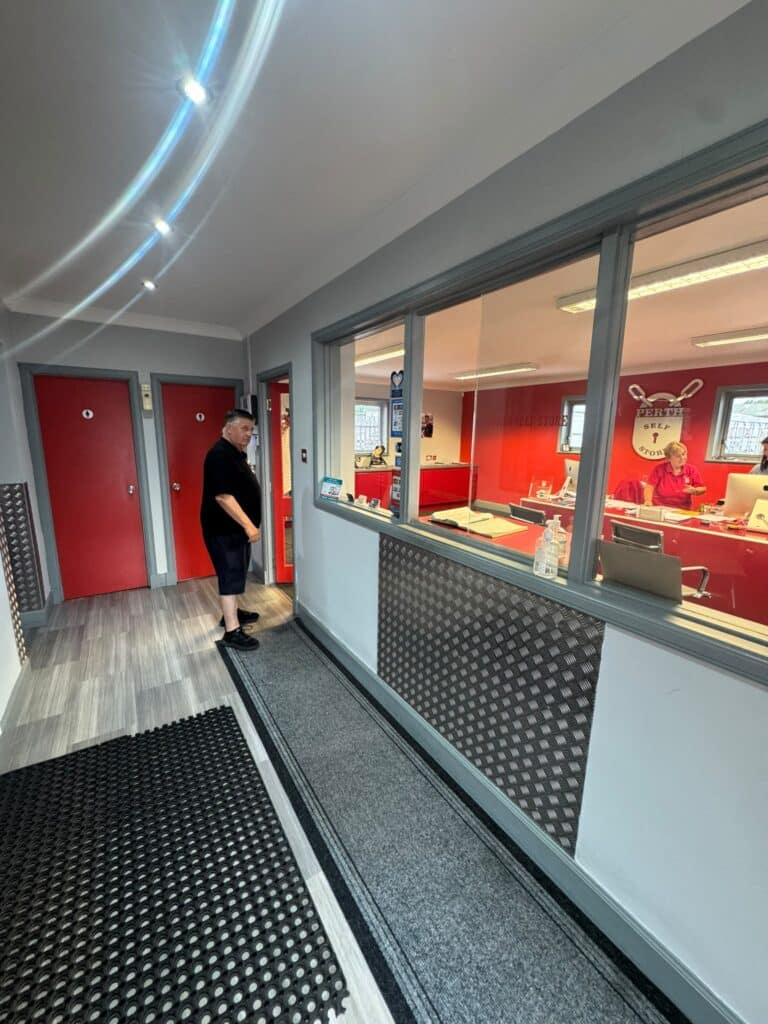
Need Storage in Perth?
Moving house and need somewhere to keep your belongings?
Tell us what you are planning to store and we can help you find a suitable option.
Telephone: 01738 632879
Email: [enquiries@perthselfstore.co.uk](mailto:enquiries@perthselfstore.co.uk)
Perth Self Store
Inveralmond Road
Inveralmond Industrial Estate
Perth
PH1 3TW
Scotland
Moving House Storage
Storage can help if you are:
- Waiting for Completion
- Moving Between Properties
- Downsizing
- Moving into Temporary Accommodation
- Renovating Your New Home
- Moving in Stages
- Decluttering Before Selling
Popular Storage Guides
- Storage Tips & Guides
- Business Storage Guide
- Packing Advice
- Storage Calculator
- Storage FAQs